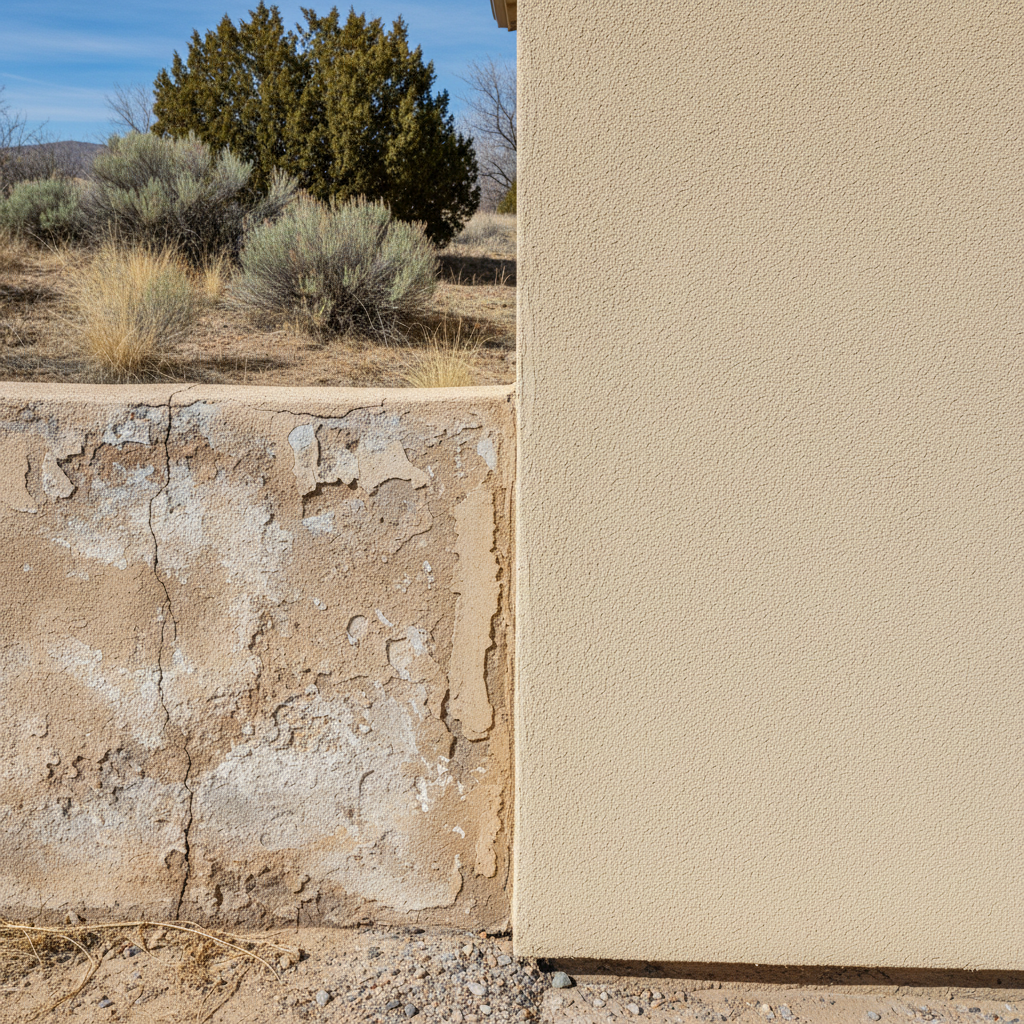
Alright, let's talk stucco finishes. When you're putting new stucco on your house, or maybe just re-dashing an old wall, one of the first big decisions you'll hit is whether to go smooth or add some texture. It's not just about how it looks, though that's a huge part of it. There are some real practical differences you should know about, especially if you live here in South Jordan.
Smooth Stucco: Sharp Looks, More Work
A smooth stucco finish is pretty much what it sounds like. We apply it to get a really even, flat surface, kind of like an interior plastered wall, but on the outside of your home. Picture those sleek, modern houses you see popping up in spots like Daybreak or near the new developments around the District. That's usually the smooth stucco vibe.
Its appeal is clear: it's clean, modern, and can make a house look incredibly sharp. It catches the light beautifully, which can really brighten up a facade. But here's the catch: smooth stucco is a lot less forgiving than textured. Every little flaw, every tiny crack, every speck of dirt just jumps out at you.
I've seen it countless times. If a smooth wall gets a ding, or if the surface underneath isn't perfectly flat, you're going to notice it. And when it comes to repairs, getting a smooth finish to match up perfectly can be a real headache. You have to be super careful, and even then, sometimes you'll still spot a slight difference in how shiny it is or how it feels where a patch went on. Plus, with all our dust and those sometimes-fierce winds here in the valley, smooth surfaces tend to show dirt buildup faster. That means you might be hosing it down more often just to keep it looking good.
Textured Stucco: Hides a Lot
Now, on the flip side, you've got textured stucco. This is where you find all sorts of patterns – sand finish, worm finish, dash, Santa Barbara, cat face, and so on. We create the texture either with the aggregate mixed into the stucco itself, or by how we apply and work it with a trowel or spray gun.
The biggest perk of textured stucco, besides the specific look it gives, is how forgiving it is. Those little bumps and valleys? They do an amazing job of hiding minor imperfections in the wall underneath. Small hairline cracks that would be really obvious on a smooth surface often just disappear into the texture on a textured wall. Dirt and dust also tend to be less noticeable because the varied surface breaks up the light and shadows, making minor grime harder to spot.
When it's time for repairs, matching a textured finish is generally easier. It still takes skill, of course, but the natural variations in the texture mean a well-done patch is far less likely to stick out like a sore thumb. For homeowners here in South Jordan, where we get some pretty big temperature swings and the ground can shift a bit, textured stucco can be a real lifesaver for hiding those tiny stress cracks that inevitably pop up over time.
Cost, How Long It Lasts, and Upkeep
When we talk about the initial cost, a smooth finish usually demands a bit more skill and time to get just right, so the labor can sometimes be a little pricier. But the material cost is pretty much the same. As for durability, both are tough, but textured stucco often feels sturdier because its surface isn't as quick to show wear and tear. Maintenance is where you'll see a bigger difference: smooth stucco will likely need cleaning more often and more careful attention if it needs repairs.
My Advice for South Jordan Homeowners
Look, I've been doing this for a long time at Allied Stucco Co., and I've worked on every kind of house you can imagine, from the older places in the original South Jordan area to the brand-new builds. For most homeowners around here, especially if you're thinking long-term and want something that will hold up well with minimal fuss, I'd lean towards a textured finish.
It's not that smooth stucco is bad; it's just that it really demands a lot more perfection and upkeep. With our dry climate, the dust, and the general wear and tear of a busy family home, a textured finish just makes life simpler. It's more forgiving, hides minor blemishes, and still looks fantastic. You can even get a modern, sophisticated look with a fine sand finish or a Santa Barbara texture – that gives you the best of both worlds, a clean appearance with all the practical benefits of texture.
Ultimately, the choice is yours and depends on the look you're going for. But when you consider our local conditions and the realities of owning a home, textured stucco often comes out ahead for how long it lasts and how easy it is to maintain. Give us a call at Allied Stucco Co. if you want to talk through your options and see some samples in person. We're happy to help you figure out what's best for your place.